How to care for shakuhachi & other bamboo flutes: bindings, cracks, and cleaning
Compared to many other musical instruments, and even silver flutes, shakuhachi and other bamboo flutes can actually be easier to care for and repair. On this page, you’ll see just how simple it can be.
Bindings for Crack Repair & Prevention
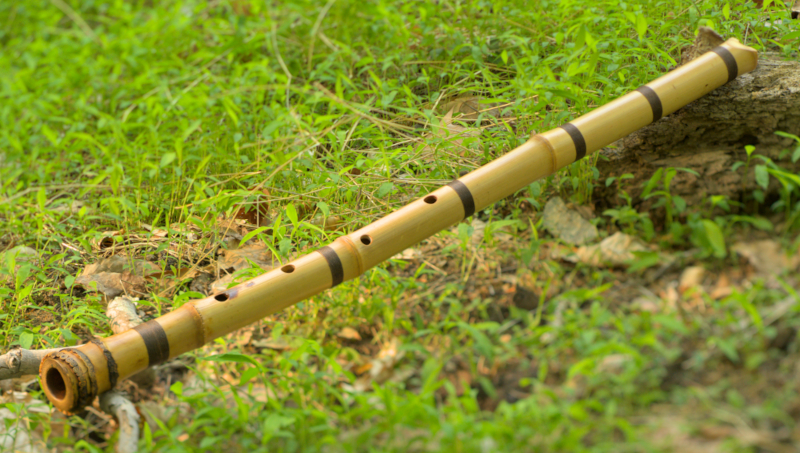
When an unbound bamboo flute develops cracks, bindings are applied to close and repair them. However, when applied proactively, bindings greatly help to prevent cracks in the first place. Once fully and properly bound, cracking that would impact performance becomes a non-issue. Bound bamboo also requires no special, fussy humidified storage. That being said, binding bamboo is an art and choice of cordage is paramount for longevity. Unideal bindings are the reason why some bound instruments still experience troublesome cracks, not because bindings cannot fully prevent them.
If the bamboo isn’t bound, it’s best to avoid extreme temperatures and prolonged exposure to dry conditions below 50% humidity. To significantly reduce the risk of cracks, use humidified storage during dry conditions. Pictured below is one of the simplest methods for this.
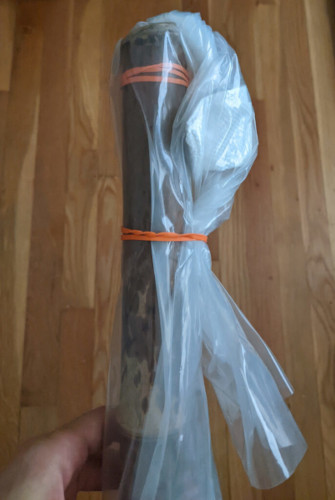
As shown in the image above, a damp piece of material is placed between two twists at the top of a plastic storage bag and is secured with a rubber band (heat seal poly tube bag). Be sure to regularly check the damp material for mold and replace or clean it as necessary.
Keeping them clean
After playing, if there’s moisture in the bore you can swab it or let it evaporate. Always protect the blowing-edge with the soft pad of your thumb. Allow the swab to rest a few seconds at each point along the bore to better absorb moisture.
Maintaining good oral hygiene, such as brushing your teeth before playing, often eliminates the need for additional cleaning. However, if necessary, you can clean the bore using either distilled white vinegar or bleach diluted with water at 1:10 (1 bleach to 10 water).
To clean:
- Soak your bore swab cloth or cleaning stick in solution. Note that bleach may remove the fabric dye of your cloth.
- Wring out excess solution back into the container or jar.
- Protect the edge with your thumb and swab the bore.
- Repeat if needed.
- Allow to air-dry overnight before playing.
Care for bamboo and it will care for you
As you can see, caring for your bamboo flutes is simple, but especially if they’re properly bound.
Thank you for learning about how to care for bamboo flutes. You’ll have many great years with your instruments.
Below you’ll find a detailed video guide on how to bind shakuhachi and other bamboo flutes, just in case you need or wish to do it your self. It’s quite skill intensive so having a professional bind your instruments is recommended when possible.
Caution! With thinner bamboo the clamping pliers may apply too much force and further crack the bamboo.
Materials and tools used:
- Bonded polyester thread/cord; ~3 yards per binding, 0.5 mm dia. minimum and up to 1 mm is best (Commercial Size 207, Tex210 and up to Size 554, Tex 600).
- Razor knife.
- Locking Forceps (teeth wrapped with electrical tape).
- Locking vise pliers/grips (teeth coated in hot glue.
- Seal with a flexible CA glue like Loctite Power-Flex. Glue must be flexible to allow bindings to move along with the bamboo slightly. This is optional. Leaving bindings uncoated is perfectly fine so long as they’re applied properly.